Published
Stroke rehab at home: how to start safely
After leaving hospital, continued rehabilitation at home is a key part of returning to daily life. Here is how to begin, and how families can help with recovery.
Written and reviewed by PT. Natpavee Samutthai
After a stroke, some people still have weakness in an arm or leg, difficulty walking, slurred speech or poor balance, so daily activities depend on help from family. Carers play an important role in supporting recovery and helping the person return to activities safely.
Where should rehab at home begin?
The heart of rehabilitation is practising the skills needed for real life — getting out of bed, walking to the bathroom, using the stairs and picking things up — adapted to each person's abilities and limits, rather than only following an exercise programme.
How does a physiotherapist plan rehabilitation?
The physiotherapist assesses muscle strength, balance, movement, ability to manage daily activities and fall risk, then plans training for that person, sets realistic goals and tracks progress — for example standing more steadily, walking around the house, or moving safely from bed to chair.
How can families help with rehab at home?
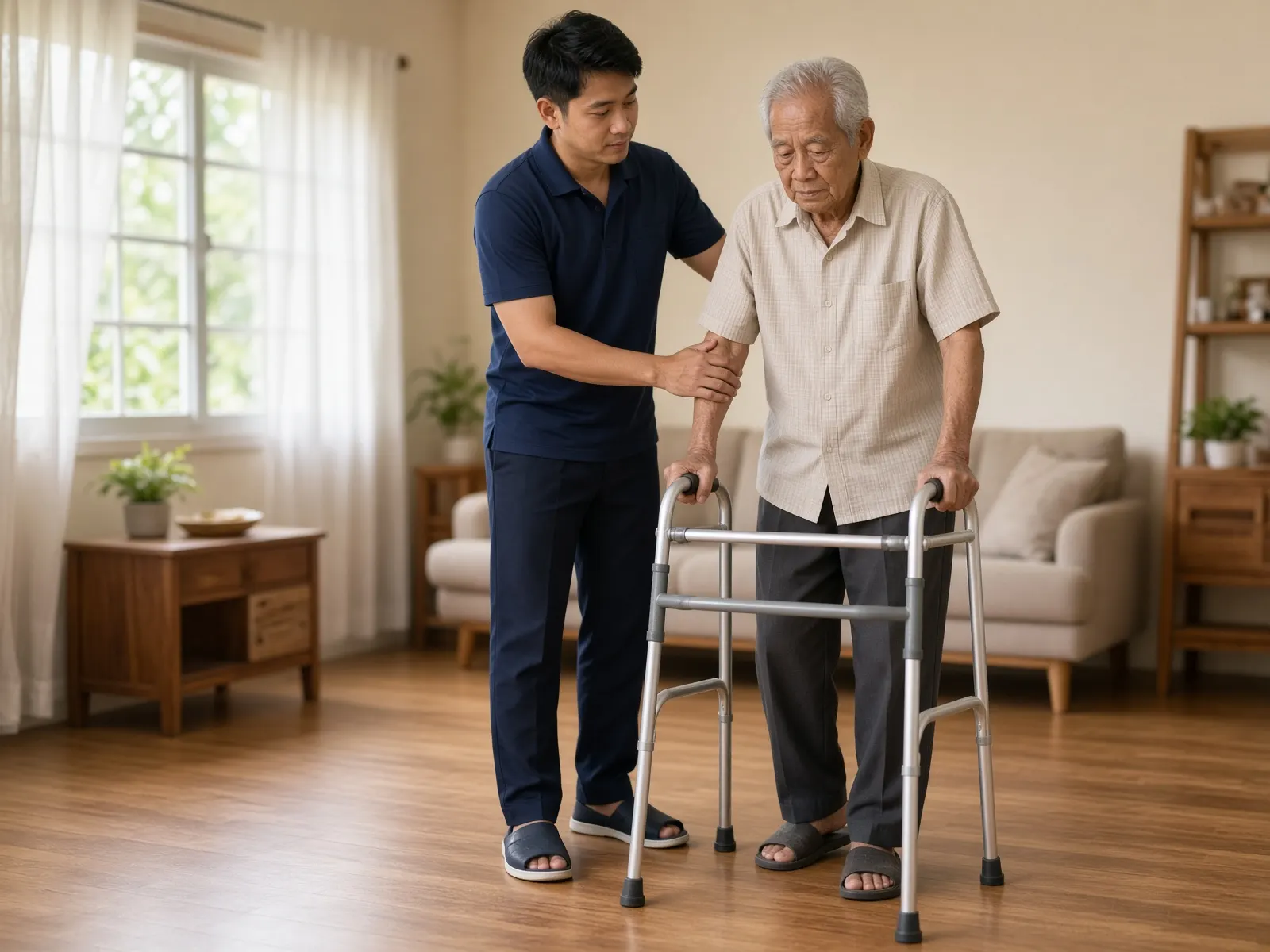
Families can take part in practice as the physiotherapist advises, such as helping with changes of position and transfers and arranging the home sensibly, and learn how to assist correctly to reduce the risk of falls and injury for both the patient and the carer.
Practice should be regular, at a level that suits the person's ability, and never forced when something feels wrong. How long and how to train should be adjusted to each person's condition and rehab plan.
Precautions during rehabilitation
If the person has a sudden severe headache, speech becomes harder, the face droops, an arm or leg suddenly becomes weaker, or any new neurological symptom appears, call 1669 for emergency help immediately. Do not wait for a physiotherapy appointment or drive to hospital yourself if symptoms are severe.
Appropriate rehab at home, together with family care, can support independence in daily activities and quality of life. The main goal is to help the person live safely and be as independent as their potential allows.
This article is general information, not a diagnosis. Everyone is different, so have a physiotherapist or doctor assess you before starting treatment.
Related service: Stroke rehabilitation